Overview
The Everest Base Camp trek is a legendary adventure in the Himalayas, offering awe-inspiring views of towering snow-capped peaks, an immersive experience of vibrant Sherpa culture, and an unparalleled sense of achievement. This remarkable journey takes trekkers through dense rhododendron forests, picturesque villages, and challenging high-altitude trails, ultimately leading to the base of the world’s highest mountain, Mount Everest (8,848m).
Along the way, adventurers witness the stunning landscapes of Sagarmatha National Park, cross suspension bridges over roaring rivers, and visit centuries-old monasteries that hold deep spiritual significance. The trek also provides opportunities to interact with the resilient mountain communities, savor traditional Nepali cuisine, and experience the warm hospitality of local teahouses. While physically demanding, the trek is a life-changing experience that rewards trekkers with breathtaking scenery, personal growth, and unforgettable memories in one of the most spectacular regions on Earth.
Trip Highlights
- Experience a private helicopter transfer, offering breathtaking aerial views of Mount Everest and neighboring peaks like Lhotse, Nuptse, and Ama Dablam.
- Enjoy a scenic flight over the Himalayas and the Dudh Koshi River, setting the stage for an unforgettable adventure.
- Explore Namche Bazaar, a lively Sherpa town known as the gateway to Everest, where acclimatization days are typically spent.
- Witness the dramatic Khumbu Icefall, a striking frozen cascade near Everest Base Camp.
- Visit the historic Tengboche Monastery, a sacred site with panoramic mountain views.
- Ascend to Kala Patthar (5,545m) for the most stunning close-up views of Everest, particularly during sunrise or sunset.
- Test your physical and mental resilience on this challenging trek, making it a truly rewarding and life-changing experience.
Itinerary
Upon arrival at Tribhuvan International Airport in Kathmandu, our representative will warmly welcome you. Look for a sign with your name as you exit the Arrival Terminal Hall after collecting your luggage. You will then be escorted to your hotel.
Welcome to Kathmandu, the vibrant capital of Nepal, where ancient heritage blends with modern life. The city’s medieval charm is reflected in its narrow alleys, intricately carved wooden temples, and beautifully adorned palaces.
At the hotel, enjoy a refreshing welcome drink as you receive your room key. Before checking in, our team will conduct a short trek briefing to ensure you are well-prepared for the journey ahead. We recommend arriving in Kathmandu during the morning or daytime to allow ample time for rest and acclimatization. This also gives you the opportunity to explore Thamel, a bustling tourist hub, where you can purchase or rent any last-minute trekking gear.
Meals Included: None
Accommodation: Dwarika Hotel
Altitude: 1336 Meter
After an early breakfast, we head to Kathmandu's domestic airport for our flight to Lukla.
Flight Details:
- Duration: The journey from Kathmandu to Lukla takes approximately 30–40 minutes.
- Departure: Early morning flights are scheduled for better weather conditions.
- Delays: Due to unpredictable mountain weather, flight delays can last several hours or even days.
Upon arrival in Lukla, you will be welcomed by porters who will assist in preparing for the trek. The journey begins with a descent toward Phakding (2,610m), following the Dudh Koshi River and crossing multiple suspension bridges. The trail is relatively gentle and passes through charming villages like Chheplung and Ghat, offering stunning views of lush hills and snow-capped peaks.
The gradual descent from Lukla (2,810m) to Phakding aids in acclimatization, reducing the risk of altitude sickness.
Accommodation & Meals:
- Overnight at a local teahouse, which provides basic but comfortable lodging.
- Typical meals include dal bhat (lentils with rice), momos (dumplings), and warm noodle soups.
Additional Tips:
- If you missed buying essential trekking gear in Kathmandu, Phakding has small shops for last-minute supplies.
- While altitude sickness is not a major concern at this stage, staying hydrated and maintaining a steady pace is essential.
Meals Included: Breakfast/Lunch/Dinner
Accommodation: Tea House
Altitude: 2810- 2610 Meter
Phakding is a quaint village nestled along the Dudh Koshi River, offering a peaceful setting for trekkers. After a restful night, the journey continues with a descent into the river valley, crossing multiple suspension bridges, including the iconic Hillary Suspension Bridge near Monjo. These crossings provide breathtaking views of the surrounding landscapes, and if the weather is clear, you may catch your first glimpse of Mount Everest, though it is often partially obscured by other peaks.
Acclimatization & Terrain:
As you ascend, the terrain becomes increasingly rugged and rocky, and you may start feeling the effects of altitude gain. To ensure proper adjustment and minimize the risk of altitude sickness, an extra acclimatization day is scheduled, allowing your body to gradually adapt to the higher elevations.
Meals Included: Breakfast/Lunch/Dinner
Accommodation: Local Lodges
Altitude: 2610 Meter
Acclimatization Day in Namche Bazaar
Namche Bazaar, a bustling Sherpa town, is a key stop for trekkers in the Khumbu region. Acclimatization here is essential to prevent altitude sickness and prepare for the higher elevations ahead.
Morning Activities:
- Start your day with a nutritious breakfast at your lodge, with options ranging from traditional Nepali meals to Western-style breakfast.
- For those seeking additional exercise and acclimatization, an early morning hike to Syangboche (1-2 hours) offers breathtaking views of Everest, Lhotse, and Ama Dablam.
- Continue to the Everest View Hotel (3,800m) for panoramic mountain vistas, where you can relax, take photos, and soak in the scenery.
Afternoon & Acclimatization Tips:
- Spend the afternoon resting at the lodge, preparing for the trek ahead.
- Hydrate well and eat light yet nutritious meals, ensuring sufficient carbohydrates and protein intake to support acclimatization.
Meals Included: Breakfast/Lunch/Dinner
Accommodation: Local Lodges
Altitude: 2610 Meter
Trek from Namche Bazaar to Tengboche
This section of the Everest Base Camp trek takes you deeper into the Khumbu region, offering breathtaking views of Everest, Ama Dablam, and Lhotse. The trek covers 10-12 km (6-7.5 miles) in 5-6 hours, with an elevation gain of 600m (1,970 ft).
Trek Highlights:
- Depart Namche Bazaar, following a well-marked trail towards Kyangjuma, a picturesque Sherpa village.
- Gradual descent through rhododendron and pine forests, passing the Namche Viewpoint, which offers spectacular mountain panoramas.
- Cross the Dudh Koshi River via a suspension bridge, a thrilling spot to admire the valley.
- Challenging ascent begins after the bridge, leading through pine, juniper, and rhododendron forests. In spring, blooming rhododendrons add vibrant colors to the landscape.
- Pass through Phunki Thenga, a small settlement, where you can take a short rest before continuing the final push to Tengboche.
Arrival in Tengboche (3,860m):
- The village offers panoramic views of Everest, Lhotse, Nuptse, and Ama Dablam.
- Visit the Tengboche Monastery, one of the most significant Buddhist monasteries in the region. You may have the opportunity to attend a prayer session and experience the spiritual ambiance.
Acclimatization & Weather Tips:
- Tengboche’s high altitude (3,860m) requires you to stay hydrated, rest well, and monitor for altitude sickness symptoms.
- Weather can be unpredictable, so be prepared for sudden temperature drops, strong winds, and potential snowfall.
Meals Included: Breakfast/Lunch/Dinner
Accommodation: Local Lodges
Altitude: 3860Meter
Trek from Tengboche to Dingboche
This section of the Everest Base Camp trek takes you through remote villages and yak pastures, with an increasing sense of wilderness as you gain altitude. The trek covers 10-12 km (6-7.5 miles) in 5-6 hours, with a steady climb to Dingboche (4,430m).
Trek Highlights:
- Start with a descent from Tengboche towards the Imja Khola River, passing through rhododendron and juniper forests. The downhill section (30-40 minutes) offers an easy start.
- Gradual ascent begins, offering breathtaking views of Ama Dablam, which becomes even more prominent along the trail.
- Pass yak pastures and spot local herders tending to their livestock.
- Reach Pangboche, home to one of the oldest monasteries in the region. You can take a short detour to visit Pangboche Monastery, a culturally significant site.
- Continue the trek towards Dingboche, where the landscape becomes harsher and more rugged as you move further into the high-altitude zone.
Acclimatization & Weather Tips:
- Dingboche sits at 4,430m, so take it slow, drink plenty of water, and be mindful of altitude sickness.
- As you ascend, temperatures drop significantly, especially in the evenings. Wear warm layers, a hat, and gloves to stay comfortable.
Meals Included: Breakfast/Lunch/Dinner
Accommodation: Local Lodges
Altitude: 4430 Meter
Acclimatization Day at Dingboche (4,430m)
Acclimatization in Dingboche is essential to help your body adjust to the altitude and reduce the risk of altitude sickness. While it's a rest day, engaging in light activity is beneficial for acclimatization.
Optional Acclimatization Hike:
- Hike to Nagarjun Hill (5,000m) – A 2-3 hour trek offering stunning panoramic views of Lhotse, Makalu, and Ama Dablam.
Acclimatization & Health Tips:
✔ Stay hydrated – Drink plenty of water to combat dehydration at high altitudes.
✔ Eat nutritious meals – Light but energy-rich food helps with acclimatization.
✔ Listen to your body – If you feel symptoms of altitude sickness, inform your guide or lodge staff immediately.
✔ Avoid alcohol – It can lead to dehydration and worsen altitude sickness symptoms.
This day is about rest, recovery, and gradual adaptation to ensure a safer and more comfortable trek ahead.
Meals Included: Breakfast/Lunch/Dinner
Accommodation: Local Lodges
Altitude: 4430 Meter
Dingboche to Everest Base Camp Heli Tour & Return to Kathmandu
A helicopter tour from Dingboche to Everest Base Camp offers an unforgettable aerial perspective of the Himalayas, showcasing breathtaking views of Mount Everest, the Khumbu Glacier, and surrounding peaks. This thrilling journey allows you to experience the grandeur of the Everest region without the long return trek.
Tour Highlights:
✔ Scenic flight over Everest Base Camp & Khumbu Glacier
✔ Panoramic aerial views of Everest, Lhotse, Nuptse & Ama Dablam
✔ A time-saving and luxurious alternative to trekking back
After soaking in the spectacular sights, the helicopter flies directly to Kathmandu, where you will be transferred to your hotel, Dwarika’s, for a well-deserved rest and relaxation.
Meals Included: Breakfast
Accommodation: Dwarika Hotel
Altitude: 1336 Meter
Bhaktapur Exploration & Luxury Stay at Dwarika’s Resort, Dhulikhel
Today’s journey offers a perfect blend of culture, history, and luxury. Begin by exploring the vibrant streets of Kathmandu, visiting UNESCO World Heritage Sites that showcase Nepal’s rich heritage.
Next, head to Bhaktapur, a city renowned for its well-preserved medieval charm, intricate architecture, and vibrant local culture. Wander through its ancient squares, admire the pagoda-style temples, and immerse yourself in the artistry of traditional pottery and woodwork.
Conclude the day with an overnight stay at Dwarika’s Resort in Dhulikhel, a haven of tranquility and wellness. Enjoy panoramic Himalayan views, indulge in holistic healing experiences, and relish authentic Nepali cuisine in a serene setting. This experience perfectly balances cultural exploration with relaxation and rejuvenation.
Meals Included: Breakfast/Lunch/Dinner
Accommodation Dwarika’s Resort
Altitude: 1550 Meter
Sunrise, Namobuddha Hike & Yoga Retreat at Dwarika’s Resort
Start the day with a breathtaking sunrise view from Dwarika’s Resort, followed by a short hike to Namobuddha, one of Nepal’s most sacred Buddhist sites. This peaceful pilgrimage destination is renowned for its ancient stupa, vibrant monasteries, and serene Himalayan backdrop. According to legend, a compassionate prince once offered his life to a starving tigress here, making Namobuddha a symbol of selflessness and devotion. The site’s tranquil ambiance makes it ideal for reflection, meditation, and spiritual exploration.
Returning to Dwarika’s Resort, immerse yourself in a transformative yoga session designed to enhance holistic well-being. Guided by expert yoga masters, the program blends asana (postures), pranayama (breathwork), meditation, and a yogic diet. A personalized consultation with an Ayurvedic doctor and yoga expert helps tailor practices, treatments, and nutrition to your unique needs. This experience fosters physical, mental, and spiritual harmony, offering the perfect retreat to relax, rejuvenate, and reconnect with yourself.
Meals Included: Breakfast/Lunch/Dinner
Accommodation: Dwarika’s Resort
Altitude: 1550 Meter
Morning Hike & Yoga Retreat at Dwarika’s Resort
After a nutritious breakfast, embark on a refreshing short hike through the serene landscapes surrounding Dwarika’s Resort. The peaceful trails offer stunning Himalayan views, fresh mountain air, and a chance to reconnect with nature.
Following the hike, indulge in a revitalizing yoga session guided by experienced instructors. Combining asana (postures), pranayama (breathwork), and meditation, this session is designed to enhance flexibility, reduce stress, and promote inner balance. Whether you're a beginner or an advanced practitioner, the personalized approach ensures a deeply restorative and transformative experience.
This wellness-focused morning allows you to rejuvenate both body and mind, making it the perfect way to embrace the tranquility and holistic essence of Dwarika’s Resort.
Meals Included: Breakfast/Lunch/Dinner
Accommodation: Dwarika’s Resort
Altitude: 1550Meter
Farewell to Nepal – Departure Day
As your incredible journey in Nepal comes to an end, it’s time to bid farewell to the majestic Himalayas. We hope you had an unforgettable experience exploring Nepal’s breathtaking landscapes, rich culture, and warm hospitality.
Our representative will transfer you to the airport approximately three hours before your scheduled flight. We sincerely appreciate the opportunity to host your adventure and look forward to welcoming you back for another extraordinary journey in Nepal. Safe travels and see you again!
Meals Included: Breakfast
Includes/Excludes
Cost Included
- Trekkers need a Sagarmatha National Park Permit for park entry and a TIMS Card for registration, ensuring safety and emergency tracking.
- Transportation includes all arrival and departure services, along with round-trip Kathmandu-Lukla flights.
- A licensed trekking guide will accompany you, offering cultural insights and ensuring safety, while a porter will carry up to 10 kg of your gear for a more comfortable trek across varying altitudes and terrain.
- Accommodation includes a standard hotel in Kathmandu and tea houses or lodges along the trekking route, providing basic yet comfortable rooms with beds, blankets, and shared bathrooms, with full-board meals featuring Nepali and some Western options.
- Meals include breakfast, lunch, and dinner, featuring traditional Nepali dishes like dal bhat, momos, soups, and noodles during the trek, along with breakfast in Kathmandu, while snacks such as energy bars and fruits are provided, though additional drinks may incur extra charges.
- Insurance: Reliable trekking agencies provide insurance for your guide and porter, covering emergency evacuation and accidents.
- Guides usually carry a basic first aid kit for emergencies, although it’s recommended to bring your own personal first aid supplies, especially for common trek-related issues like blisters, headaches, or digestive issues.
- Communication (Emergency) - In case of emergency, there may be access to satellite phones or radio communication in remote areas.
Cost Excluded
- International Flights: The trekking package does not cover airfare to and from Nepal.
- Travel Insurance: Trekkers are advised to set up their own travel insurance that covers trekking-related activities, even though the guide and porter may be covered.
- Snacks, beverages (such as bottled water, soft drinks, or alcohol), and personal belongings (such as toiletries) are often excluded from the category of personal expenses.
- Visa Fee: The price of acquiring a visa for Nepal is not included by the package.
- Tips are often appreciated and anticipated for your guide and porter, however they are not required.
- Extra Services: Generally speaking, optional services like additional lodging, food, or activities (like yoga lessons or paragliding) are not covered.
- Camping bags, down coats, or trekking poles are examples of trekking gear, however it's usually preferable to pack your own high-quality equipment. In essence, you may hire equipment at a low cost.
- Hot water costs vary in Everest Base Camp region, with prices higher than Kathmandu due to remote location challenges. Services become more expensive at higher altitudes.
FAQs
The Everest Base Camp trek is moderately challenging, requiring long daily walks (5-8 hours) with steep ascents and descents at high altitudes. However, with adequate acclimatization and physical preparation, most trekkers can complete it successfully.
The trek typically takes 12-14 days, including acclimatization periods, covering a total distance of approximately 130 km (80 miles) round trip.
The best trekking seasons are:
✅ Spring (March-May) – Pleasant temperatures, clear skies, and vibrant rhododendron blooms.
✅ Autumn (September-November) – Stable weather, excellent visibility, and moderate temperatures.
Winter (December-February) brings extreme cold, while the monsoon season (June-August) experiences heavy rainfall and poor visibility.
While not mandatory, hiring a guide is highly recommended for navigation, safety, and cultural insights. A porter can carry your gear, making the trek more comfortable. Additionally, employing them supports the local economy.
Trekkers need two permits: the Sagarmatha National Park Entry Permit and the Khumbu Pasang Lhamu Rural Municipality Permit, both of which can be obtained in Kathmandu or Monjo.
Everest Base Camp sits at an altitude of 5,364 meters (17,598 feet) above sea level.
Yes, altitude sickness is a significant concern. To minimize the risk:
✔ Acclimatize properly by spending extra nights in Namche and Dingboche.
✔ Ascend gradually, avoiding gains of more than 500m per day above 3,000m.
✔ Stay hydrated and avoid alcohol.
✔ Consult your doctor about taking Diamox as a preventive measure.
Teahouses (lodges) provide basic yet comfortable lodging with twin-sharing rooms and shared bathrooms. Facilities become more limited at higher altitudes.
Teahouses offer a variety of meals, including dal bhat (rice, lentils, vegetables) for sustained energy, along with noodles, pasta, momos, porridge, eggs, bread, and pancakes. Beverages like tea, coffee, hot lemon, and ginger honey tea are also available.
Yes, Wi-Fi is offered at most teahouses for a small fee, and mobile networks (Ncell & Namaste) work in some areas. Electricity is available, but charging electronic devices incurs an additional cost at higher altitudes.
Yes, travel insurance is strongly recommended. It should include coverage for high-altitude evacuation (above 5,000m), medical emergencies, and trip cancellations or delays.
Yes, you can trek solo, but having a guide is safer. While the route is well-marked, challenges like weather, altitude, and health risks make solo trekking more demanding.
In case of altitude sickness or other emergencies:
✔ Descend immediately to a lower altitude.
✔ Seek medical assistance at health posts in Namche or Pheriche.
✔ Helicopter evacuation is available if you have proper insurance.
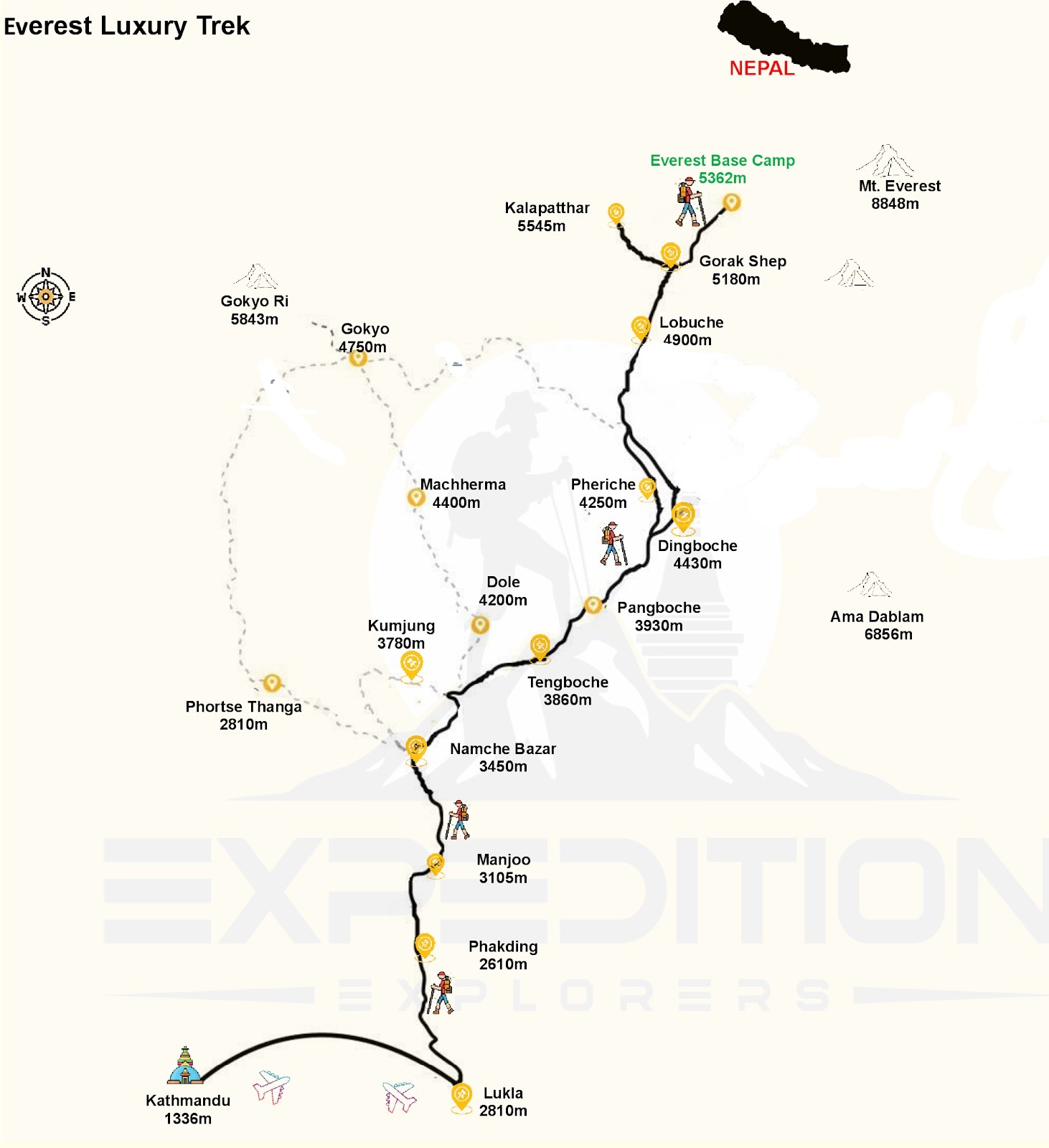
Road Map